Walk into any waiting room and you’ll normally decide how you feel about the business within seconds. Before you’ve spoken to a receptionist, before you’ve sat down with a coffee, and certainly before you’ve met the person you came to see, the surroundings have already formed an opinion in your mind. That’s why reception and waiting areas have become such an important part of commercial interior design. Whether it’s a dental practice, GP surgery, architect’s office, estate agency, hotel reception, beauty salon or corporate headquarters, businesses are increasingly investing in interiors that feel warm, welcoming and memorable rather than cold and clinical.
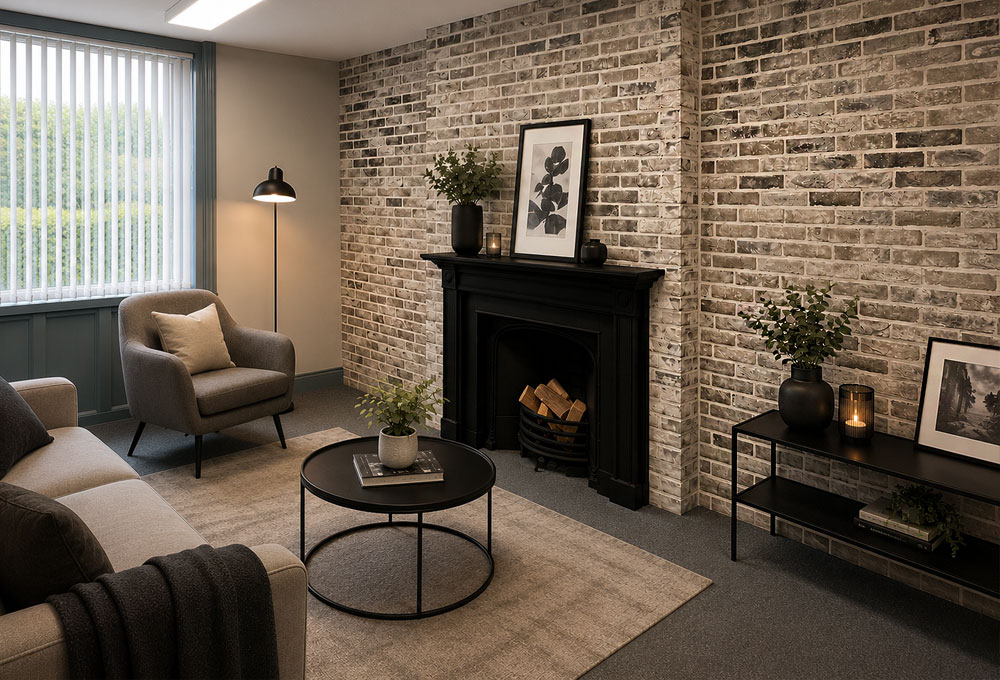
One material that continues to grow in popularity is the brick slip. Offering the appearance of traditional exposed brick without the weight or structural requirements of full brickwork, brick slips provide designers with a practical way to introduce texture, depth and character into almost any interior. Across the UK, commercial designers are moving away from flat white walls and embracing authentic materials that create a more comfortable environment for visitors. Current interior trends also show a wider movement towards natural textures, craftsmanship and warmer finishes in commercial environments, particularly within healthcare and hospitality settings.
For waiting rooms specifically, brick slips strike an ideal balance between aesthetics and practicality. They create a feature wall that instantly catches the eye, require very little maintenance once installed and stand up well to the daily demands of busy public spaces. Unlike wallpaper or painted feature walls that may scuff or require frequent redecorating, quality brick slips offer a long-lasting solution that continues looking impressive for years. Whether your aim is to create a boutique hotel feel or simply make visitors feel more relaxed while they wait, brick slips provide an excellent foundation for achieving that goal.
People naturally judge businesses by their surroundings. A modern, well-designed waiting room immediately communicates professionalism, attention to detail and trustworthiness. That first impression is particularly important in industries where customers may already feel anxious, such as healthcare, legal services or financial advice. A sterile environment filled with plain white walls can unintentionally increase stress, whereas spaces that incorporate warm textures and natural materials tend to feel calmer and more reassuring.
Interior designers have recognised this shift for several years. Modern healthcare environments, for example, are increasingly moving away from purely clinical aesthetics in favour of spaces that resemble hotels or comfortable lounges. Richer materials, warmer colours and biophilic influences are now being specified because they improve the overall experience for patients, visitors and staff alike.
Brick slips fit perfectly into this philosophy. They introduce authenticity without overwhelming the room and help create a setting that feels established rather than temporary. Instead of looking like another generic reception area, your business immediately gains personality. Visitors often remember these subtle design choices, even if they cannot explain exactly why the space felt more comfortable.
Texture has a surprisingly powerful impact on how people experience a room. Smooth painted plasterboard reflects light evenly but can sometimes appear flat or lifeless. Brick slips introduce subtle shadows, tonal variation and tactile detail that give walls far greater visual interest. This additional depth naturally makes spaces feel more inviting.
There’s also an emotional connection with brick. It reminds people of traditional craftsmanship, heritage buildings and quality construction. Even within highly contemporary interiors, exposed brick introduces a feeling of permanence and authenticity that synthetic wall finishes struggle to replicate. As commercial interiors increasingly prioritise comfort over minimalism, textured finishes like brick slips continue to become more desirable.

Brick slips are thin sections of brick designed specifically for wall cladding. Rather than constructing an entire structural brick wall, installers bond these slips directly onto existing surfaces using specialist adhesives and pointing systems. The result is virtually indistinguishable from full brickwork while occupying only a fraction of the space.
There are two primary categories available. Real brick slips are cut directly from genuine clay bricks, preserving authentic texture, colour variation and weathering. Manufactured or cast brick slips replicate the appearance of brick using specially formulated materials that offer consistency and reduced weight. Both options deliver attractive results, with the choice usually depending on budget, installation requirements and the desired aesthetic.
The flexibility of brick slips allows them to be installed onto plasterboard, masonry, cement boards and many other prepared substrates. This makes them ideal for refurbishments where adding structural brickwork simply isn’t practical.
Commercial buildings often require finishes that balance durability with design flexibility. Brick slips meet both requirements exceptionally well. They can transform a plain reception wall into a striking focal point without requiring major structural alterations or sacrificing valuable floor space.
Unlike many decorative finishes, brick slips are also highly versatile. They complement timber, glass, polished concrete, porcelain tiles and modern lighting equally well. This means designers can use them within industrial-inspired offices, premium retail environments, healthcare receptions and hospitality venues without appearing out of place. Their timeless appearance also helps future-proof interiors, reducing the likelihood of expensive redesigns simply because trends have changed.
Waiting rooms experience constant daily use. Chairs scrape against walls, luggage brushes surfaces and visitors regularly come into contact with feature areas. Any finish chosen for these environments must withstand continual wear while maintaining its appearance.
Brick slips perform exceptionally well in these demanding settings. Unlike painted plaster that chips easily or wallpaper that can peel over time, brick slips are inherently robust. Once properly installed and pointed, they become an integral part of the wall finish capable of handling years of everyday use with minimal visible deterioration.
Maintenance costs often influence material selection as much as aesthetics. Fortunately, brick slips require relatively little ongoing attention. Most installations simply require occasional dusting or light cleaning using appropriate products recommended by the manufacturer.
Because quality brick slips are colourfast rather than painted, minor scuffs or marks are generally far less noticeable. This significantly reduces the need for regular redecorating, making them a cost-effective long-term investment for commercial premises where downtime can quickly become expensive.
Interior design trends inevitably change, but exposed brick has remained popular for decades. Rather than following short-lived fashions, brick slips provide a timeless architectural feature that continues to complement evolving furniture, branding and décor.
Current design trends favour authenticity, craftsmanship and tactile finishes over purely minimalist interiors, reinforcing the long-term appeal of brick surfaces. Designers increasingly specify natural materials because they age gracefully and create spaces people genuinely enjoy spending time in.

Healthcare interiors are changing rapidly. Designers increasingly favour warmer, hospitality-inspired environments that help reduce patient anxiety while remaining practical for clinical use. Brick slips work particularly well when paired with oak furniture, soft lighting, muted greens and indoor planting. Together, these materials create a calmer atmosphere without compromising hygiene or functionality.
For architects, creative agencies and technology businesses, industrial interiors remain highly desirable. Exposed brick paired with black steel, timber furniture and polished concrete creates a contemporary aesthetic that feels both professional and approachable. Brick slips achieve this look without requiring the original building to feature exposed masonry.
Luxury doesn’t always mean marble and gold. Increasingly, premium commercial interiors rely on carefully layered natural materials instead. Grey brick slips combined with walnut panelling, textured fabrics and indirect lighting create sophisticated reception spaces that feel elegant rather than extravagant.
Hotels have long understood that comfort encourages positive experiences. Commercial businesses are increasingly borrowing this philosophy by designing waiting rooms that resemble boutique hotel lounges. Brick slips help anchor these spaces, adding warmth and visual richness that encourages visitors to relax rather than simply wait.

White, cream and buff brick slips maximise natural light while maintaining warmth. They’re particularly suitable for healthcare, beauty clinics and smaller waiting rooms where creating an open feeling is important.
Traditional red clay bricks remain one of the most recognisable options available. They bring heritage, character and familiarity to interiors while complementing timber furniture beautifully. This style works especially well within cafés, estate agencies, hospitality venues and converted commercial buildings.
Grey brick slips have become increasingly popular within modern offices and commercial developments. Their neutral tones pair effortlessly with black metal, glass partitions and minimalist branding while still providing considerably more character than painted walls alone. Mixed grey blends also disguise everyday wear exceptionally well, making them particularly practical for busy public spaces.
Successful installations begin with suitable preparation. Walls should be clean, stable and appropriate for the selected adhesive system. Existing finishes may require priming or replacement depending on their condition. Professional installers will also ensure corners, movement joints and expansion requirements are correctly addressed before work begins.
Lighting dramatically influences how brick slips appear. Wall washers, recessed LEDs and concealed uplighting emphasise the natural texture by creating subtle shadowing across the surface. Warm white lighting typically produces the most inviting atmosphere, particularly in waiting rooms where comfort is the primary objective.
Furniture should complement rather than compete with the brick feature wall. Upholstered seating, timber coffee tables, indoor planting and carefully chosen artwork all contribute towards creating a cohesive interior that feels professionally designed.

Brick slips have evolved far beyond their industrial origins and are now one of the most versatile wall finishes available for commercial interiors. In waiting rooms, they provide the perfect combination of durability, warmth and timeless design, helping businesses create memorable first impressions while reducing long-term maintenance requirements.
As interior design continues moving towards authentic materials and hospitality-inspired spaces, brick slips remain an excellent investment for reception areas, healthcare environments, offices, salons and retail spaces alike. They offer the visual impact of traditional brickwork without the structural complexity, allowing almost any waiting room to be transformed into a welcoming environment that visitors genuinely enjoy spending time in.
Yes. When correctly installed and maintained, brick slips are commonly used in healthcare, dental and commercial environments to create warmer, more welcoming interiors while remaining durable and practical.
No. They generally require only occasional dusting or gentle cleaning, making them ideal for busy commercial settings.
Yes. Many brick slip systems are specifically designed for installation onto prepared plasterboard, cement board and masonry substrates.
Lighter shades such as white, cream or buff help reflect more light and create the impression of a larger, brighter space.
Absolutely. Brick slips pair exceptionally well with contemporary materials including timber, glass, steel and concrete, making them suitable for offices, clinics, retail stores and hospitality environments alike.
