Interior design trends may change every few years, but exposed brick walls continue to remain one of the most sought-after features in modern kitchens. Their natural texture, warm tones, and timeless appearance make them an ideal choice for homeowners wanting to add personality and depth to their living spaces. Whether incorporated into a country-inspired home or a sleek urban apartment, exposed brick instantly creates a more welcoming and visually engaging atmosphere.
Today’s homeowners are moving away from sterile, overly polished interiors and leaning towards spaces that feel authentic and full of character. This shift is one of the reasons exposed brick kitchens have become increasingly popular in recent kitchen design trends. The imperfect surface, natural variation, and historic feel of brickwork bring a unique charm that cannot easily be replicated with painted plaster or tiles.
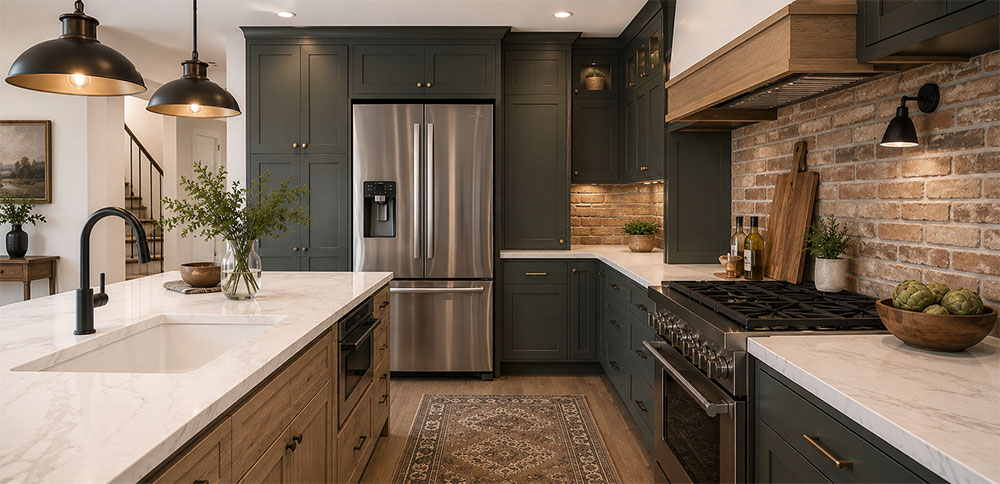
Kitchens are no longer viewed purely as functional cooking areas. They have become central social spaces where families gather, entertain guests, and spend significant time throughout the day. Because of this, creating a warm and comfortable environment has become a major priority in kitchen renovation projects.
Exposed brick contributes to this atmosphere by introducing natural texture and visual warmth. Unlike flat wall finishes, brickwork creates depth and shadow, giving kitchens a more layered and sophisticated appearance.
Another advantage of exposed brick is its flexibility. It can complement a wide range of materials and finishes, including timber, marble, metal, concrete, and glass. This adaptability makes it suitable for both traditional and contemporary homes.
For homeowners who prefer cosy and inviting interiors, rustic kitchen design remains one of the most effective ways to style exposed brick walls. Rustic kitchens focus heavily on natural materials, earthy colours, and traditional detailing.
Aged red brick paired with oak worktops and shaker cabinets creates a classic farmhouse-inspired appearance that feels comfortable and timeless. Soft lighting, vintage accessories, and warm neutral tones help complete the overall aesthetic.
Many rustic kitchens also include open shelving against exposed brick walls. This approach keeps the room feeling open while allowing decorative pieces such as ceramic cookware, glass jars, and plants to become part of the design.
Natural textures play an important role within rustic interiors. Combining exposed brick with wood flooring, stone surfaces, and linen fabrics creates a balanced environment that feels both relaxed and refined.
At the opposite end of the spectrum, industrial kitchen style uses exposed brick to create a more contemporary and urban-inspired look. This design style became popular through converted warehouses and loft apartments where original brickwork was left exposed as part of the architectural character.
Industrial kitchens typically feature darker colour palettes and raw materials. Black steel, stainless steel appliances, concrete worktops, and minimalist cabinetry pair particularly well with exposed brick surfaces.
Lighting also plays a key role within industrial interiors. Oversized pendant lights, Edison bulbs, and matte black fixtures help reinforce the urban aesthetic while drawing attention to the texture of the brick wall.
Despite its modern appearance, industrial kitchen style still benefits from the warmth brick naturally provides. Without exposed brick, industrial spaces can sometimes feel cold or clinical. The brick softens these harder elements and helps create a more balanced atmosphere.
Not all exposed brick walls create the same effect. The colour, texture, and finish of the brick significantly influence the final look of the kitchen.
Traditional red brick offers warmth and works particularly well in rustic kitchen settings. Whitewashed brick provides a softer and brighter appearance, making it ideal for smaller kitchens with limited natural light.
Grey-toned or darker brick often suits industrial kitchen designs better because it complements metal and concrete finishes more effectively.
Some homeowners prefer heavily weathered brick with visible imperfections, while others opt for cleaner and more uniform brickwork. The choice ultimately depends on the desired atmosphere and overall interior style.

Many modern homes do not have original brick walls hidden beneath plaster, but brick slips offer an excellent alternative. Brick slips are thin sections of real brick designed to replicate the appearance of full brickwork without requiring major structural changes.
Brick slips have become increasingly popular in kitchen renovations because they are lightweight, easier to install, and available in a wide range of finishes and colours.
They can be used to create feature walls, chimney surrounds, breakfast bar fronts, and splashback areas. High-quality brick slips provide the same texture and natural variation as traditional brick, making them difficult to distinguish from full brick walls once installed.
For homeowners looking to achieve the exposed brick look without extensive building work, brick slips provide a highly practical solution.
Once the brick wall is installed or uncovered, styling the surrounding space becomes essential for achieving a cohesive appearance.
Neutral colour palettes often work best because they allow the brick to remain the main focal point. Soft greys, warm whites, taupe shades, and earthy greens complement exposed brick particularly well.
Wooden shelving is another popular addition to brick wall kitchens. Floating oak shelves help soften the rough texture of the brick while adding warmth and practicality.
Indoor plants can also enhance exposed brick beautifully. Greenery introduces freshness and colour while balancing the heavier visual weight of brick surfaces.
When accessorising exposed brick kitchens, restraint is important. Overcrowding the wall with excessive decoration can reduce the impact of the brick itself.

One particularly striking design feature is the exposed brick chimney in kitchen spaces. Older homes often contain chimney breasts hidden behind plasterboard or outdated finishes. Revealing the original brick beneath can instantly transform the room.
Exposed brick chimneys work exceptionally well around cookers and range hoods, creating a natural focal point within the kitchen. They can also help define open-plan layouts by visually separating cooking and dining areas.
Many designers choose to combine traditional brick chimney features with sleek modern cabinetry to create contrast between old and new materials. This mixture of styles often produces some of the most visually interesting kitchen designs.
Although exposed brick is durable, kitchens naturally produce moisture, grease, and cooking residue that can affect the appearance of the wall over time.
Applying a breathable protective sealant helps preserve the brick while preventing staining and moisture absorption. Regular light cleaning using a soft brush and mild soap solution is usually enough to maintain the surface.
Older brickwork may occasionally require repointing if mortar joints begin to deteriorate. Keeping mortar in good condition ensures the wall remains both structurally sound and visually attractive.
Exposed brick walls continue to play a major role in modern kitchen design because they offer something many contemporary materials lack: genuine warmth and character. Whether incorporated into a rustic farmhouse kitchen or a sleek industrial-inspired interior, brickwork adds depth, texture, and timeless appeal.
As homeowners continue searching for interiors that feel authentic and inviting, exposed brick kitchens are likely to remain one of the most influential kitchen design trends for years to come. With the right styling choices, lighting, and complementary materials, exposed brick can transform almost any kitchen into a stylish and memorable living space.
